

When most people think of Las Vegas, they picture neon lights, casinos, and desert heat. Fossils rarely make the list. But here’s the thing. Beneath the bright skyline and suburban sprawl lies a deep, ancient past filled with mammoths, giant ground sloths, and saber-toothed cats. Yes, really.
If you’re looking for the Best fossil discoveries in Las Vegas, you’re in for a surprise. This city is home to some of the most important Ice Age fossil sites in North America. From protected national monuments to local museum exhibits, there’s real history here. And it’s not locked behind glass in some far-off place. It’s right here in Southern Nevada.
Las Vegas may feel modern and fast-paced, but parts of it are frozen in time. Millions of years ago, this desert looked very different. There were wetlands, rivers, and grasslands. Huge mammals roamed the area. When the climate changed, many of them disappeared, but their remains stayed behind.
Today, several fossil discoveries in Las Vegas give us a window into that lost world.
Columbian mammoths once walked across what is now the Las Vegas Valley. These towering creatures could stand up to 13 feet tall at the shoulder. Their fossils have been found in abundance at Tule Springs.
Mastodons, their distant cousins, also left behind remains. Though they looked similar, mastodons had different teeth and diets. Seeing their fossils up close makes it easier to imagine just how wild this place once was.
Not all the fossils belong to elephants. Giant ground sloths, some as big as a small car, once lumbered through the region. Their claws and bones have been uncovered in several excavation sites.
And yes, there were predators too. Dire wolves and American lions hunted these lands. Fossilized teeth and bones tell that story clearly. It’s a little eerie to think about, especially when you’re standing in a quiet desert park with only the wind for company.
Don't Miss: Top 5 Free Attractions in Las Vegas You Must Visit
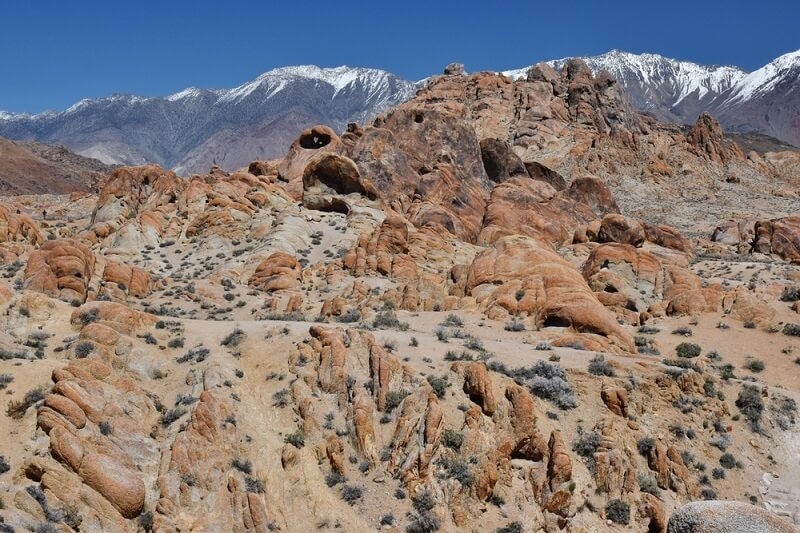
Just 20 minutes northwest of the Strip sits one of the most significant paleontological sites in the country. Tule Springs Fossil Beds National Monument protects thousands of acres filled with Ice Age history.
The Tule Springs fossil beds are famous for their well-preserved remains from the late Pleistocene era. Scientists have uncovered fossils that date back more than 12,000 years.
What makes this site special is not just the number of fossils, but the context. Layers of sediment show changes in climate over time. Researchers study these layers to understand how ecosystems respond to warming and cooling cycles.
Tule Springs is not a polished theme park. It’s raw and open. That’s part of its charm. You’ll find:
Right next to the national monument, you’ll find Ice Age Fossils State Park. This newer state park makes the fossil story more accessible for families and casual visitors.
Ice age fossils state park focuses on education and preservation. The park includes interpretive displays and marked trails that guide you through key fossil areas.
It’s smaller than some national parks, but that works in its favor. You can explore it in a few hours. It’s perfect for a weekend outing, especially if you’ve got kids who are into dinosaurs and prehistoric animals.
The park is designed with visitors in mind. Expect:
It feels calm. You can hear birds, feel the dry air, and almost imagine mammoths grazing nearby. That connection between imagination and science is powerful.
If you prefer indoor exploration, Las Vegas has solid museum options, too. A fossil museumin Las Vegas can round out your trip nicely.
The Las Vegas Natural History Museum features Ice Age exhibits alongside dinosaur displays and marine fossils. It’s a compact museum, but it packs a lot into its galleries.
You’ll see reconstructed skeletons, fossil casts, and interactive displays. Kids tend to linger near the animatronic creatures, while adults often gravitate toward the detailed information panels.
The Springs Preserve also highlights the natural history of the Las Vegas Valley. While it focuses on broader environmental themes, fossils and prehistoric life are part of the story.
Here, you get context. How did the desert form? What water sources supported early life? Why did those Ice Age animals vanish? The answers tie geology, climate, and human settlement together in a way that feels cohesive.
If you’re excited about exploring fossil discoveries in Las Vegas, a little planning goes a long way.
Fall and spring offer mild temperatures. Winter can be pleasant too, though mornings may be chilly. Summer visits require serious heat precautions.
Bring:
You can easily pair Tule Springs with Red Rock Canyon or a stop at Mount Charleston. It turns into a full day of outdoor exploration.
And honestly, it feels good to balance the sensory overload of casinos with quiet desert space. One day, you’re hearing slot machines. Next, you’re listening to the wind sweep across ancient ground. The contrast is refreshing.
Read More: Valley of Fire to Las Vegas: Best Day Trip Guide 2025
The Best fossil discoveries in Las Vegas offer more than just scientific interest. They tell a story about change, resilience, and deep time. From the vast landscape of Tule Springs fossil beds to the accessible trails at Ice Age fossils state park and the engaging exhibits at a fossil museum, Las Vegas location, there’s something here for every type of explorer.
Las Vegas is not just neon lights and late-night shows. It’s mammoths and ancient wetlands. It’s ground sloths and shifting climates. And once you see that side of the city, you can’t unseen it.
The most famous finds come from Tule Springs, including Columbian mammoths, giant ground sloths, and Ice Age predators like dire wolves.
Yes, it is free to enter. There is no large visitor center yet, so plan for a self-guided outdoor experience.
Most major fossil discoveries in Las Vegas focus on Ice Age mammals, not dinosaurs. The area is better known for Pleistocene fossils.
Spring and fall are ideal due to cooler temperatures. Summer can be extremely hot, so early morning visits are safest.
This content was created by AI